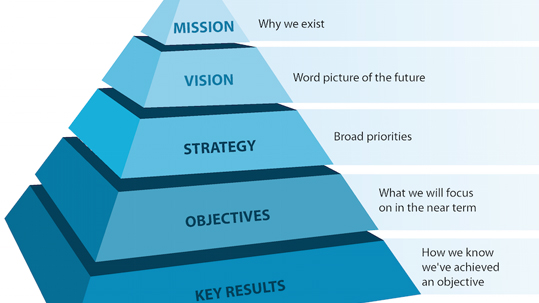
 Simple Without Being Simplistic One of the biggest benefits of the OKRs framework is simplicity. Just four words: Objectives and Key Results, that represent two basic concepts: What do you want to do, and how you’ll know you’ve achieved it? This simple taxonomy is a...
 Will You SCORE With OKR? Here are five principles to keep in mind if you hope to succeed with your OKR implementation. S is for Strategy The first two questions you have to ask yourself when launching an OKRs program is: Why OKRs, and why now? Objectives and Key...
 5 Whys To Wisdom Way back in a 1996 Harvard Business Review article authors Jim Collins and Jerry Porras introduced me to the concept of “5 Whys.”[i] The idea is simple: Whenever you’re faced with a challenging situation, ask the question why five times to reveal the...
 No Way Out! Have you ever had that dream where you’re trapped in a building, running down hallways, yanking open door after door, only to find yet another long empty hallway? At the very least it’s frustrating to be hopelessly lost without bearings, but it can also be...
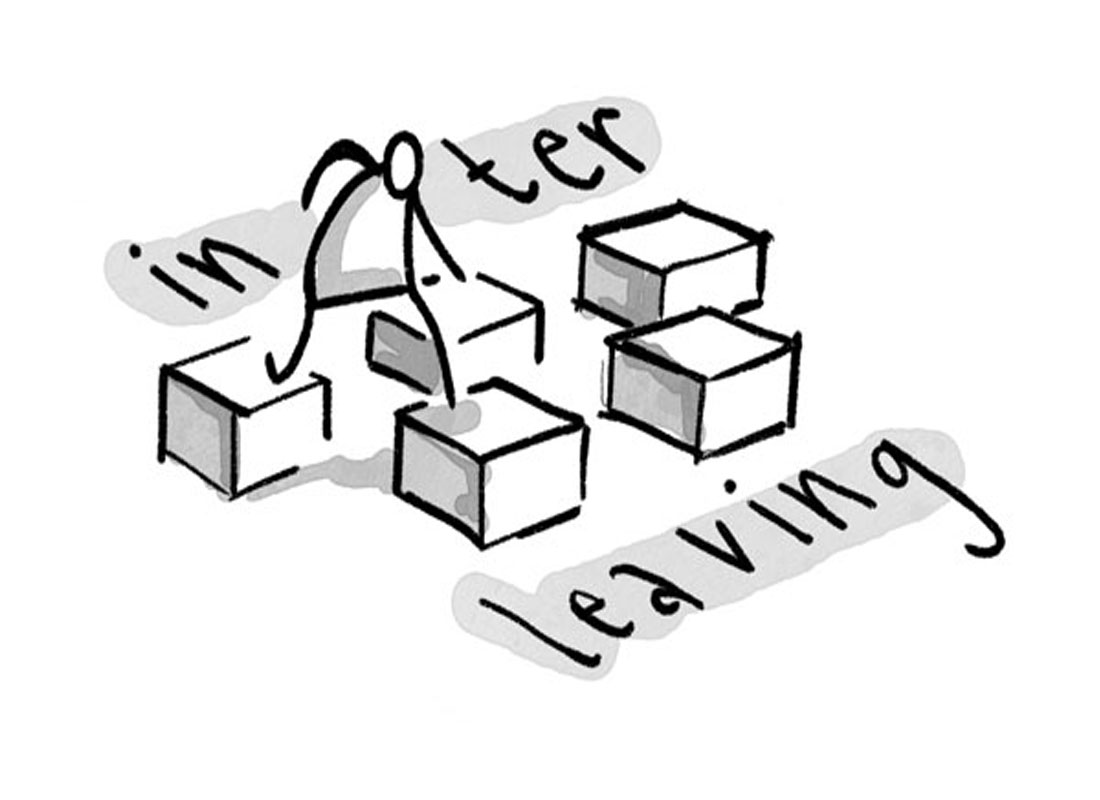 Interleaving? Did you make that up? I know what you’re thinking: “What the %#a*$ is interleaving?” I know! I’ll answer that in a second. First, let’s talk about how some organizations go about developing OKRs. In my experience it’s not uncommon for groups to split the...
 OKR – Cart or Horse? OKRs have been proven to help overcome many vexing challenges that plague modern organizations. For example, they can: foster teamwork and collaboration, drive engagement through their mix of top-down and bottom-up development, and ensure...